
UX Designer & Research Lead
12 weeks
Figma, Adobe Photoshop, Tablet, Pen & Paper
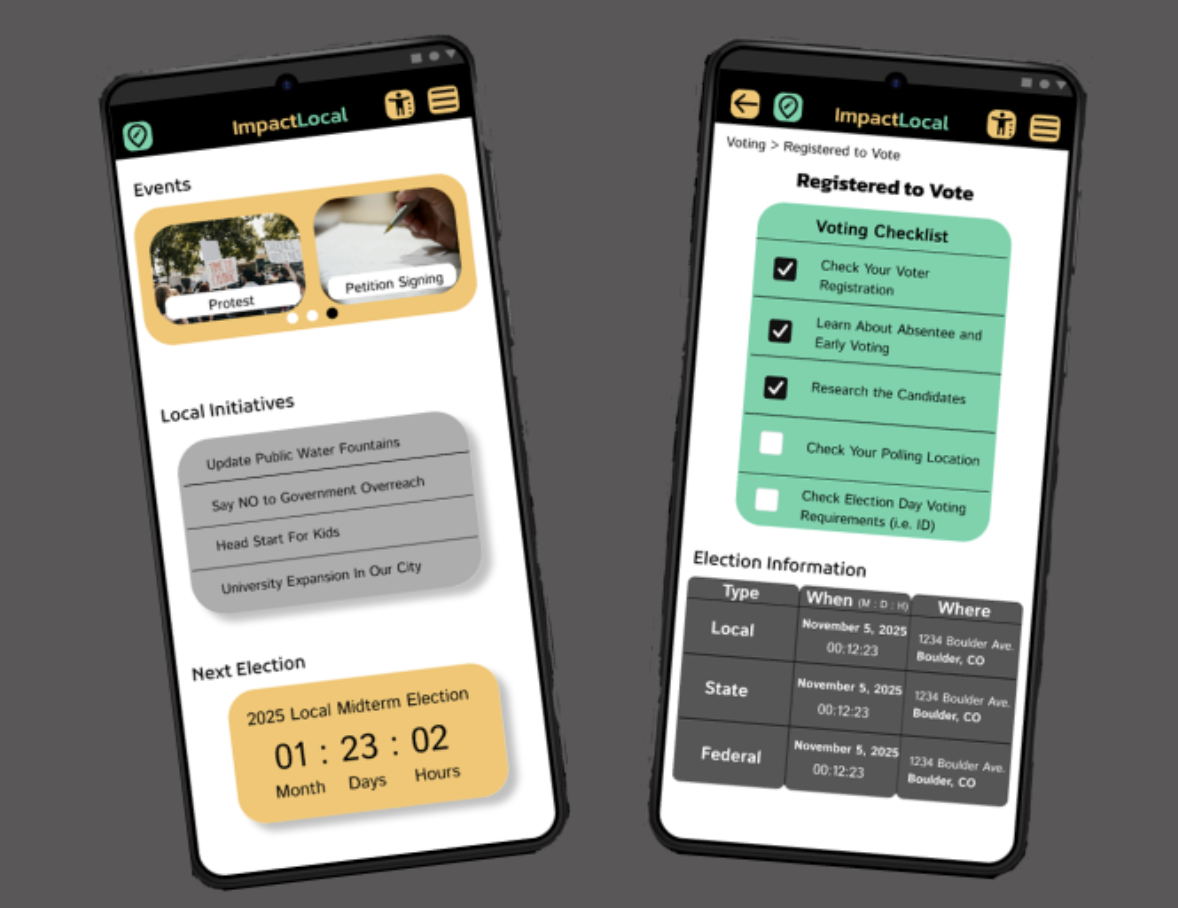
Many young people new to engaging with their communities often felt overwhelmed and unsure where to begin to make sure their voices were heard. To change that, I led the UX design of ImpactLocal, a mobile app designed to empower young people with clear, accessible information about community events and political opportunities. This case study explores how a foundation of empathy and looking beyond frustration helped to reveal a deeper need—resources that help young people take control of their own future. The resulting design values trust, simplicity, and accessibility to help young people gain the confidence they need to step forward and engage with the community in the ways that truly matter to them.
Users found it challenging to balance their daily responsibilities with becoming involved with their local community. To support them, the mobile app had to provide one clear place for planning and accessing needed information to make it easier for users to decide how, when, and where they want to engage with others. The app is a tool designed to help support young people in confidently making their own choices and expressing their opinions in a meaningful way.
Goals: 1. Create a Centralized Information Platform 2. Empower Users to Make Their Own Decisions 3. Accessibility
I conducted user research with four participants, aged 18 to 25, and used their perspectives to inform empathy maps and personas that captured the challenges and priorities that shaped their daily lives. By attentively listening to what participants shared and observing nonverbal cues such as body language, I uncovered meaningful pain points with existing tools designed to foster civic engagement among young people. Initially, I assumed that involvement in local politics—particularly voting—would be a minor focus for most participants. However, the research revealed a more nuanced reality: while community and political engagement often takes a backseat for young people, it holds deep significance for others with issues that align with their values.
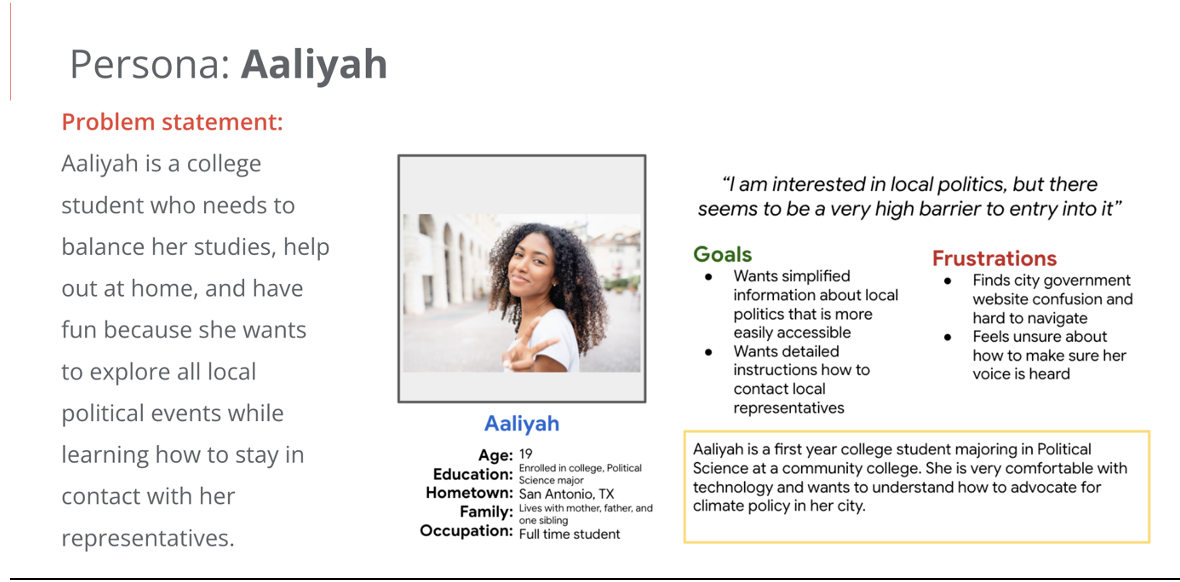
Key Insight: Many participants expressed that meeting basic personal and life needs often takes precedence; meaning civic participation tends to follow when causes feel directly relevant and impactful. Building on these findings, I created user journey maps for each persona to visualize their motivations, behaviors, and emotional responses when interacting with tools aimed at increasing community and political involvement.
Many young people--whether students, professionals, or caregivers—face the challenge of balancing everyday responsibilities and personal well-being while also trying to learn about and engage with their communities. They need accessible tools that make it easier to stay informed about local events, voting opportunities, and political issues without adding extra stress, so they can focus on their lives while participating meaningfully when it matters to them.
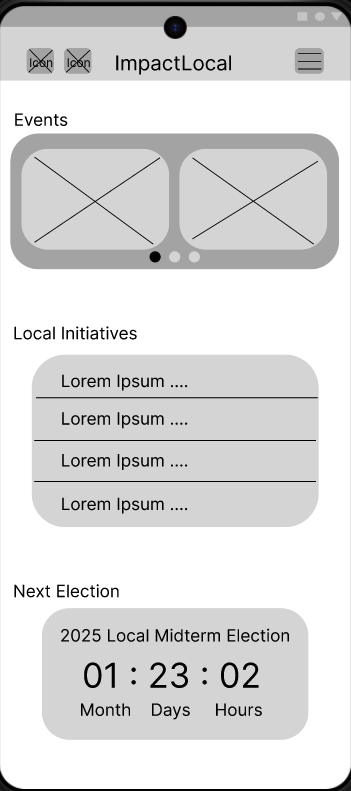
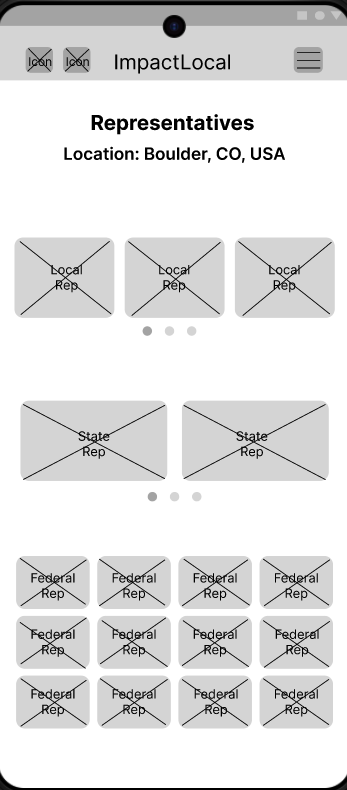
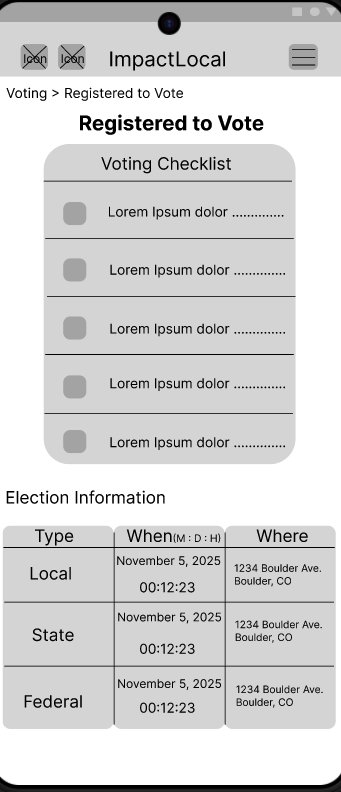
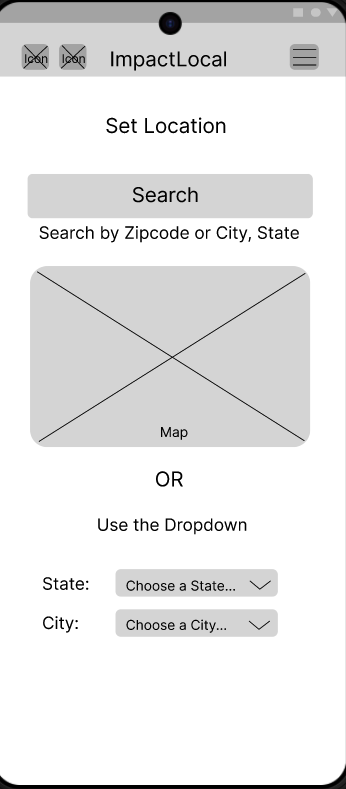
For ImpactLocal, I prioritized consistency, neutral language, and accessibility in the design:
Check out the low-fidelity prototype here:
Mobile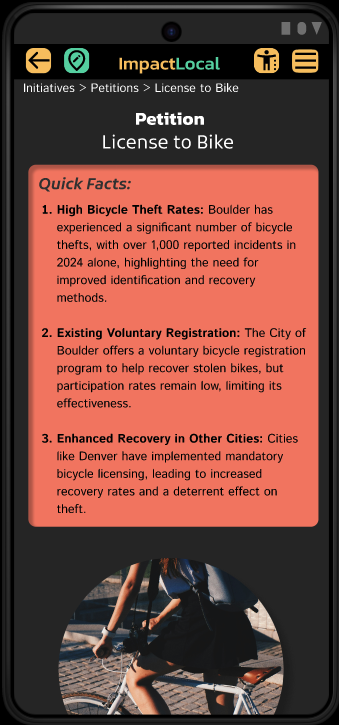
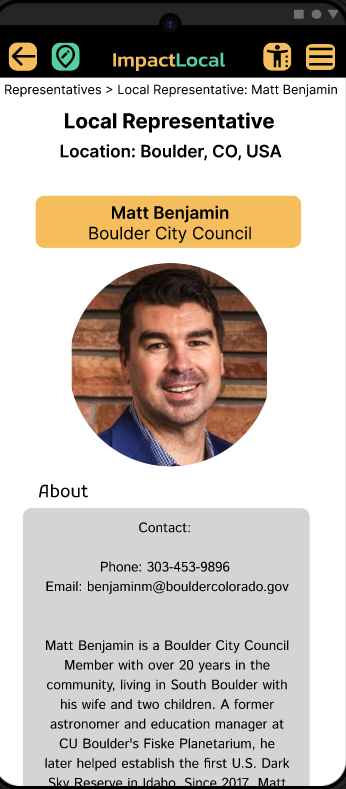
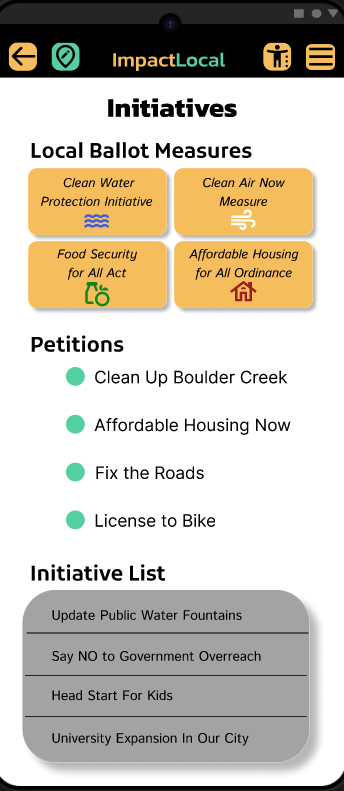
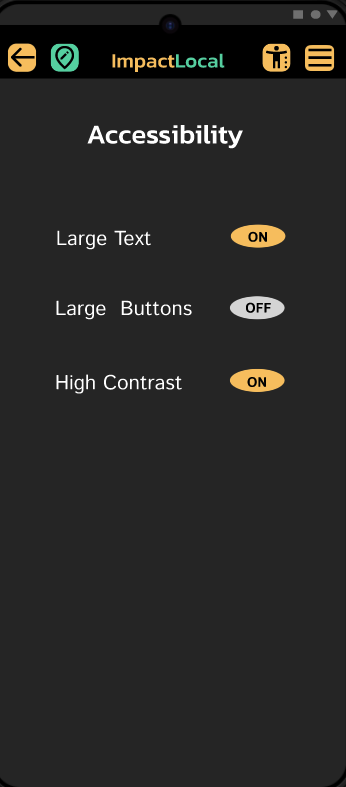
The prototype was iteratively refined throughout usability testing sessions, with participant feedback guiding improvements in accessibility and minimizing friction around common pain points. After each session, key issues were addressed promptly to ensure the design evolved in direct response to user needs.
I ran unmoderated usability tests with 6 people each time to gain user feedback and insight into the designs to iterate through the design process to improve upon the current designs.
Mobile App Design:
This project reminded me that UX can be challenging to balance out different perspectives and user needs. By leading with empathy, I was able to design solutions that were useful and not completely novel which helped to respond to a range of users’ needs and wants in an app to get young people involved in politics.
Looking back, I would have prioritized involving more users overall earlier in the design process. With the resource limitations, I made the best of what I had, but there is room for improvement in incorporating a more diverse range of users in terms of ability level, race, gender, and so on and so forth. The users’ feedback during testing offered valuable insights into accessibility considerations and what made sense to include for younger people in an app designed for them. It helped me see the product from different perspectives. Including more people from the beginning would have led to an even more inclusive and impactful design.